
By: Rev. William Cook
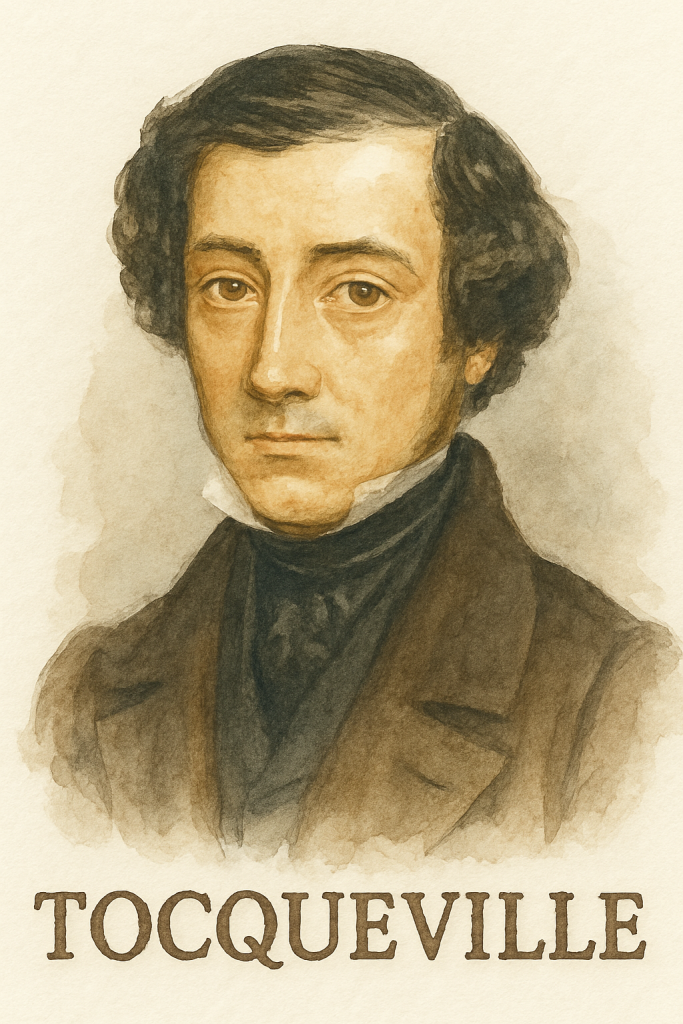
In his chronicle of Democracy in America, French diplomat and political philosopher Alexis de Tocqueville declared: “Religion gave birth to America.”[1]
Self-evident truths written into the Declaration of Independence by Thomas Jefferson in 1776, can be traced to the pulpits and pens of Puritans like Rev. John Wise, first minister of Chebacco Parish, Ipswich, Massachusetts from 1683 util his death in 1766.
The first human subject and original of civil power is the people…and when they are free, they may set up what species of government they please. The end of all good government is to cultivate humanity and promote the happiness of all, and the good of every man in all his rights, his life, liberty, estate, honor, etc., without injury or abuse done to any. (Circa 1700)
Lawyer and statesman Robert Treat Paine, a signer of the Declaration of Independence, called Dr. Jonathan Mayhew the “Father of civil and religious liberty in Massachusetts and America.” Twenty-five years before first shots were fired in the American Revolution, on the 101st anniversary of Charles I’s execution, the 29-year-old Congregational minister of Boston’s Old West Church, preached A Discourse Concerning Unlimited Submission and Non-Resistance to the Higher Powers, in which the brazen young minister condemned submission to arbitrary authority. Printed soon afterward, Mayhew’s Discourse, which the elder John Adams later testified, “was Seasoned with Witt and Satyre, Superior to any in Swift or Franklin. … was read by everybody, celebrated by Friends, and abused by Enemies.” Nineteenth-century historian J. W. Thornton claimed Mayhew’s sermon, converted into tract form, acted as the “morning gun of the revolution.”
One hundred years post-Independence, on July 9, 1876, during First Centennial Celebration festivities in Philadelphia at Carpenters Hall, a celebration that lasted six full months, Rev. George B. Spalding preached a sermon on “The Dover [New Hampshire] Pulpit During the Revolutionary War” commemorating the distinguished service of Rev. Jeremy Belknap D.D. to the cause of American Independence. Rev. Spalding asserted:
The principles of our civil liberty and of our national independence, which forty millions (sic) of people in these days are celebrating, did not find their first utterance in the great Declaration. They did not spring to life in the debates of the Provincial Congress. They did not originate in the elaborate papers of Adams and Jefferson. They did not leap forth to their first light in the impassioned eloquence of James Otis, or the vehement appeal of Patrick Henry. They had their birth in the Election Sermons, in the Fast and Thanksgiving Discourses of the Congregational ministers of New England.[2]
Dr. Christopher Pearl, Associate Professor of History at Lycoming College in Williamsport, Pennsylvania has written:
Presbyterian clergy played an important role in America’s founding by providing their congregants with crucial political and religious ideas that served as the guiding sentiments of revolution. Published and unpublished sermons and sermon notes of Presbyterian ministers with congregations throughout the thirteen colonies show that the clergy embraced and expounded Enlightenment principles that informed revolutionaries as they declared independence from Britain and formed new state governments in the heady days of 1776. From the pulpit, ministers schooled their congregants about the state of nature, natural law, the origins of civil society, and the role and purposes of government. Importantly, they even taught their flocks the limits of obedience and the right of resistance and even revolution.[3]
Dr. Pearl, Rev. Spalding, and other honest historians believed that political liberty could not exist without religious liberty, and that the clergy, particularly the Congregational ministers of New England, were forerunners of the political worldview embodied within the Charters of Freedom (a.k.a. Founding Charters). Modern history has grossly underemphasized the colonial parson as principal philosopher of our nation’s founding, and leading advocate of independence and the right of revolution. “As a body of men,” wrote Andrea Weiss, “the clergy were pre-eminent in their attachment to liberty. The pulpits of the land rang with the notes of freedom.[4]
“It was a passage of history that involved the concerted effort of military force evinced in the Revolution and the articulation of principles of free government; these principles inspired creation of a national community and became the grounds of a political orthodoxy called republican and constitutional government. Momentous developments crescendoed with British adoption of the Stamp Act of 1765, leading in little more than a decade to the decision for independence in 1776, which demanded eight years of fighting and formally ended with the signing of the peace treaty in Paris in 1783. The Federal Convention in 1787 provided a barely accepted Constitution, one immediately embellished by a Bill of Rights, that became the supreme law of the land in 1791. By the beginning of Jefferson’s second term, the institutional arrangements had been tested and operations refined, the first party system had emerged, and the country had doubled in size thanks to the Louisiana Purchase. But another strand of history accompanies, interacts with, and give roots to this familiar progress, one that is less known and lacks the direct line of development just rehearsed.”
Revolution in the spiritual life of America began within a decade of the preaching of the first sermon of the celebrated Benjamin Coleman in Boston in 1770. It is called the Great Awakening. There is reason to suppose that the two lines of development, [the Founding of America and the first Great Awakening] are intimately, even decisively, connected.
Spalding’s centennial sermon stated:
The Revolution was an accomplished fact before the war commenced. … Before Adams or Hancock, or Franklin or Jefferson had uttered their denunciations of British tyranny, before even the possibility of resistance to arbitrary power had been thought of by them, before they had even dreamed of independence and of a union of the colonies in a great nationality, —these men, in the inspiration of a gospel which is that of liberty, had been laying bare the falsity of royal assumptions, expounding the principles of good government and of manhood in the state, and schooling legislators, judges and people to an understanding of those civil rights which are the offspring of religious freedom, —and, as events thickened, in advance of all others, they were ever narrowing the issue between the colonies and the home government, concentrating more and more the aroused indignation of an oppressed people into the idea of resistance, and pointing out to the sagacious statesmen of the day the principles and method of a vital union and co-operation among the provinces. Who are these men who hold the background in the picture, whose very obscurity serves to make more prominent these others? They were Congregational ministers![5]
German-born political theorist Karl Marx, a child of the devil, who has been serving out an eternal sentence in the lake of fire for the past 140 years (and counting), accurately attested, “Separate a people from their history and they are easily persuaded.”
Why would universities purportedly preparing young leaders to shepherd the flock of God, send them into the world separated from their own legacy as the ideological Fathers of our nation, a legacy that binds them to the mission of their predecessors, who secured Liberty to themselves, their flocks, and subsequent generations of American Christendom?
The pulpits of America must reconnect with their history, or the liberties taken for granted today will be lost.
[1] Alexis de Tocqueville, Democracy in America, trans. George Lawrence, ed. J. P. Mayer (Garden City, N.Y., 1969), II, 432; cf. 46-47, 288-91.
[2] Rev. George B. Spalding, First Centennial Sermon, July 9, 1876, The Dover Pulpit During the Revolutionary War, A Discourse Commemorative of the Distinguished Service Rendered by Rev.
[3] Pearl, Christopher, Pulpits of Revolution: Presbyterian political thought in the era of the American Revolution, Journal of Presbyterian History Vol 95(1):5-18 April 2017.
[4] Andrea Weiss, In the Shadow of the Magic Mountain: American Quarterly Register, Volume 4 (Chicago: University of Chicago Press, 2008), 55-56.
[5] Rev. George B. Spalding, First Centennial Sermon, July 9, 1876, The Dover Pulpit During the Revolutionary War, A Discourse Commemorative of the Distinguished Service Rendered by Rev. Jeremy Belknap D.D. to the Cause of American Independence (Morning Star Steam Job Printing House, Dover, NH